A RED-FIGURED TERRACOTTA 'FISH' DISH, LATE CLASSICAL PERIOD, 4TH CENTURY BC
Southern Italy, probably Campanian or Apulian. Skillfully modeled, with shallow, conical sides rising from a splayed foot to an outward-curving rim. The interior is finely painted with a dark slip and accented with white details, depicting two bream and an electric ray reserved against the contrasting ground and arranged radially around the undecorated depressed center. The fish are rendered with prominent fins and large circular eyes, framed by a border of crashing-wave motifs. The underside is left unadorned, revealing the buff earthen tone of the ceramic body.
Provenance: Laurent Bermudez Primitive Arts, Berkeley, California, United States, 1993. Collection of Carmelo Barbera, Messina, Italy, acquired from the above. Thereafter in a private collection in Naples, Italy. A copy of the invoice from Bermudez Primitive Arts, dated June 1993, addressed to Carmelo Barbera, accompanies this lot. Laurent Bermudez was a Berkeley, California-based dealer specializing in ancient and ethnographic art, active by the early 1980s and into the 1990s. Operating under the name Laurent Bermudez Primitive Arts, he handled a broad range of material, including Pre-Columbian, African, Indigenous, Egyptian, Roman, and Islamic works, many of which subsequently entered distinguished private collections and museums.
Condition: Good condition with expected wear, firing irregularities, the foot possibly reattached, a visible loss and small chips to the rim, encrustations, light rubbing to pigments with minor touchups, and scattered surface scratches.
Weight: 223.3 g
Dimensions: Diameter 17.5 cm
Fish plates painted in the red-figure technique developed into a distinctive and popular category of Greek and South Italian tableware from the fifth century BC onwards. Conventionally associated with the serving of fish, the characteristic form combines a broad, shallow dish with a central depression, interpreted either as a receptacle for sauce or as a means of collecting oil and juices from the food. Painted examples frequently depict fish and other marine species arranged around this central feature.
On the present dish , the species appear to correspond to fish still found in the Mediterranean: the rounded example is a torpedo fish, or electric ray, identifiable by the dark spots on its back, while the other two are bream, a variety of sargus. All were edible species and could command high prices in antiquity, with the torpedo particularly valued for its flesh and liver.
Literature comparison:
Compare a related Campanian clay fish plate, dated 350-325 BC, 23 cm diameter, in the Musée du Louvre, inventory number Cp 1106. Compare a related South Italian clay fish plate, dated to the 4th century BC, 20.1 cm diameter, in the Kunsthistorisches Museum, Vienna, inventory number Antikensammlung, IV 2147. Compare a related South Italian terracotta red-figure fish plate, dated c. 330-320 BC, 16.5 cm diameter, in the San Antonio Museum of Art, object number 86.134.89.
Auction result comparison:
Type: Closely related
Auction: Christie's London, 6 December 2017, lot 52
Price: GBP 13,750 or approx. EUR 22,000 converted and adjusted for inflation at the time of writing
Description: A Campanian red-figured fish plate, attributed to the Heligoland Painter, circa 4th century BC
Expert remark: Compare the closely related form, manner of painting, and decorative 'fish' motifs. Note the similar size (18.5 cm).
Auction result comparison:
Type: Closely related
Auction: Christie's New York, 16 June 2020, lot 135
Price: USD 13,750 or approx. EUR 15,500 converted and adjusted for inflation at the time of writing
Description: A Campanian red-figured fish plate, attributed to the Palmer-Scallop Painter, circa 350-325 BC
Expert remark: Compare the closely related form, manner of painting, and decorative 'fish' motifs. Note the similar size (20.6 cm).
- Period: LATE CLASSICAL PERIOD, 4TH CENTURY BC
- Materials: terracotta
- Dimensions: Diameter 17.5 cm
- Estimate: EUR 1,500 – 3,000
- Starting bid: EUR 1,500
- Auction house: Galerie Zacke
- Sale: Fine Antiquities & Ancient Art · 2026-11-20
- Lot: 0089
- Collectip: UNDERVALUED ↓
View the lot at auction

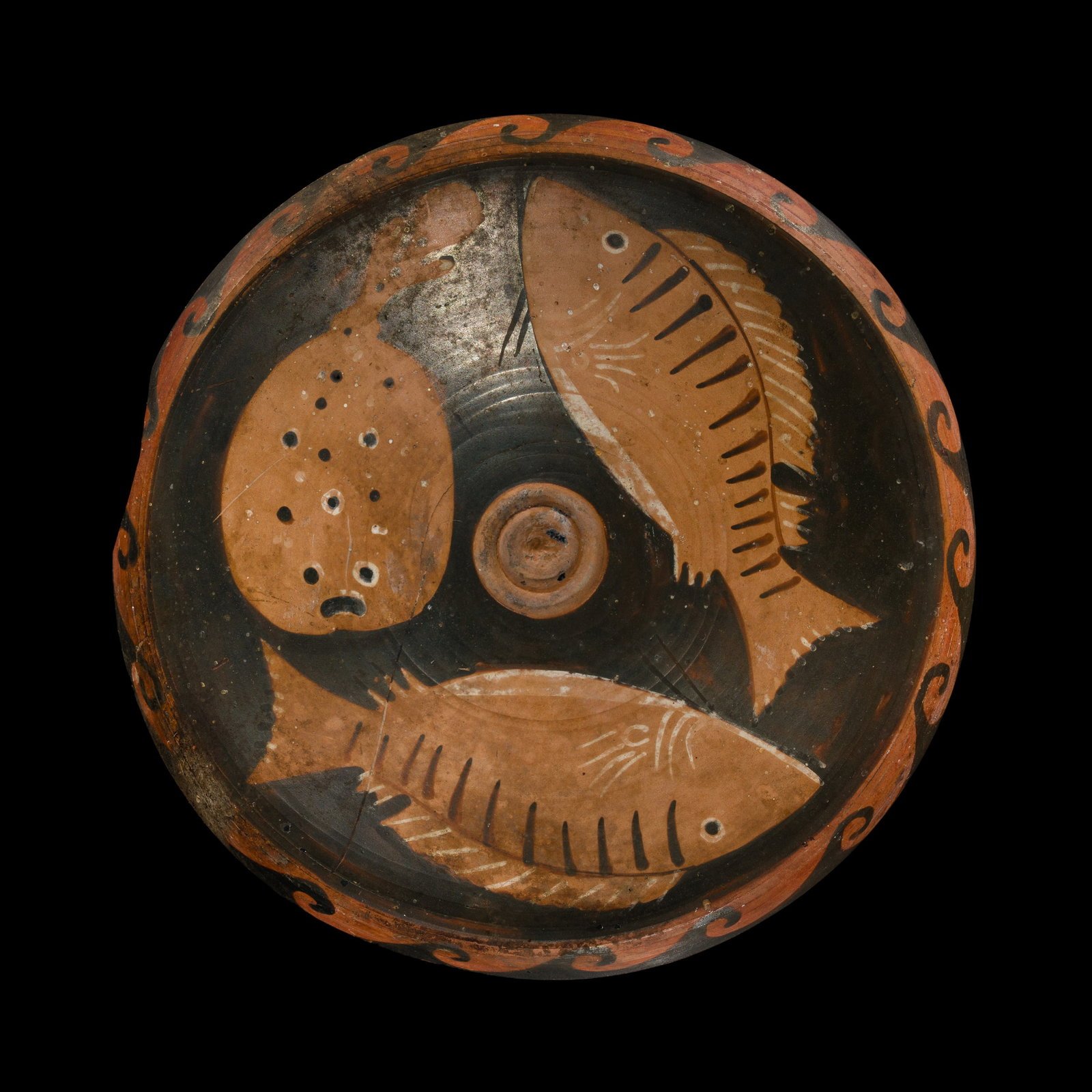 Image 1 of 8
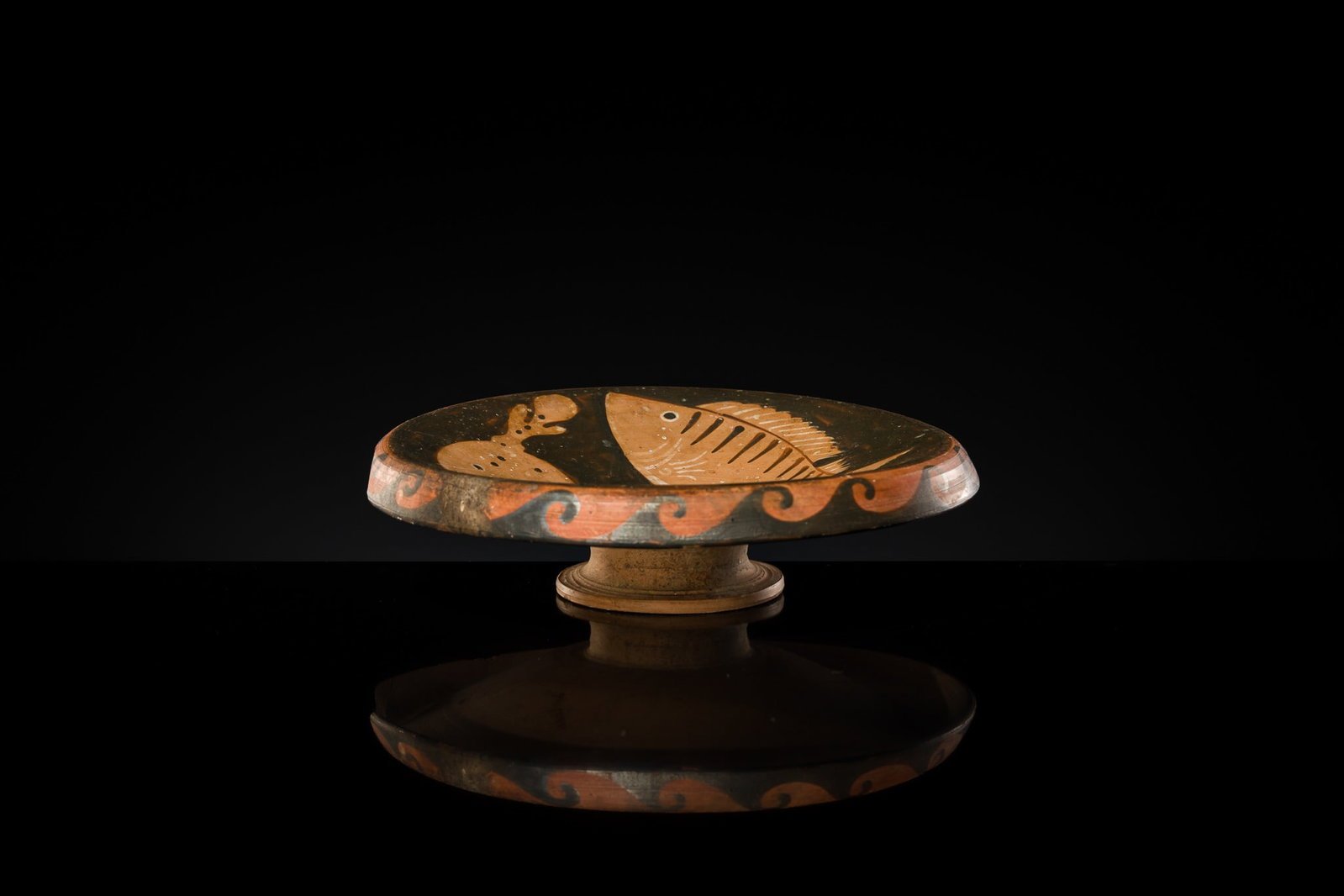 Image 2 of 8
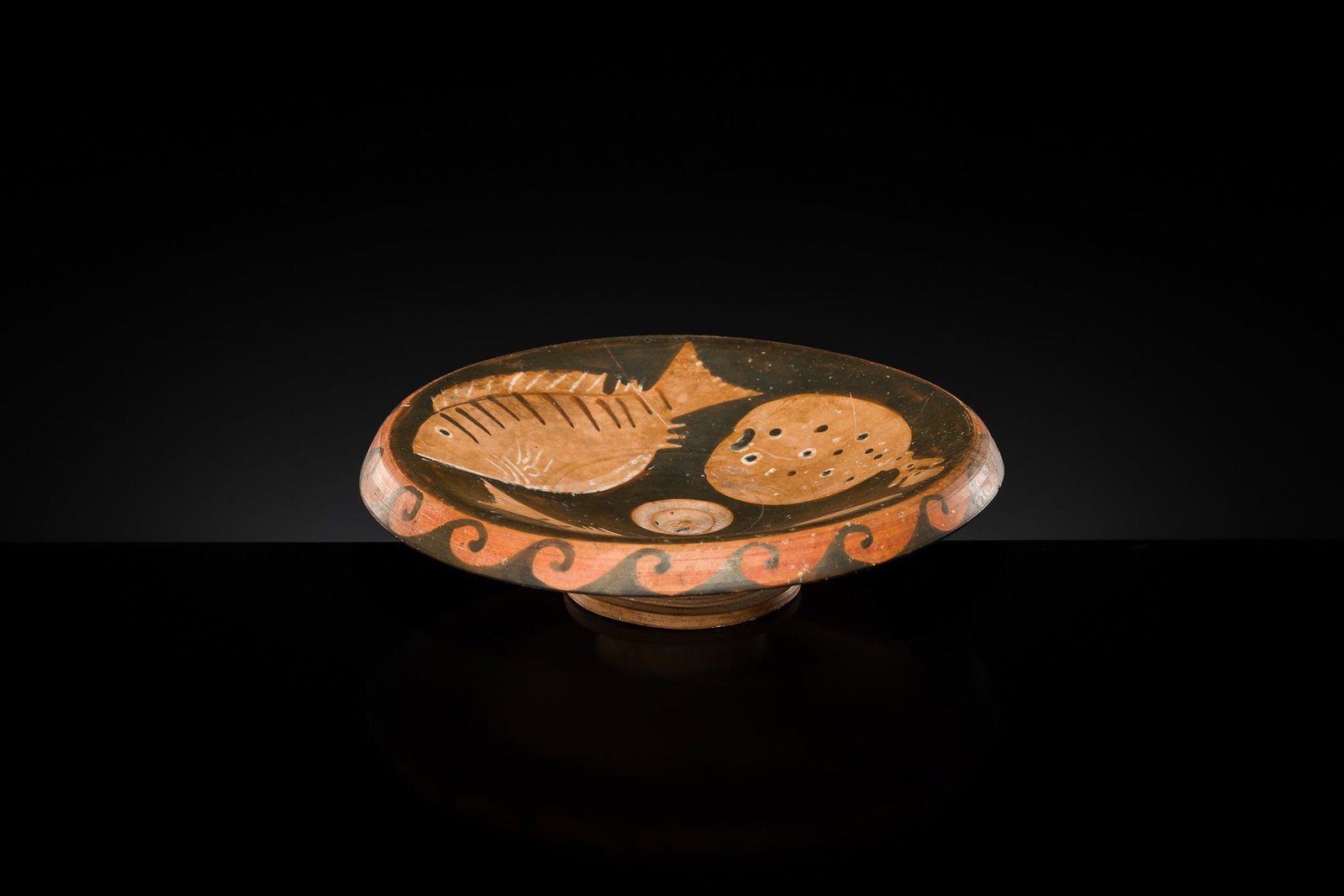 Image 3 of 8
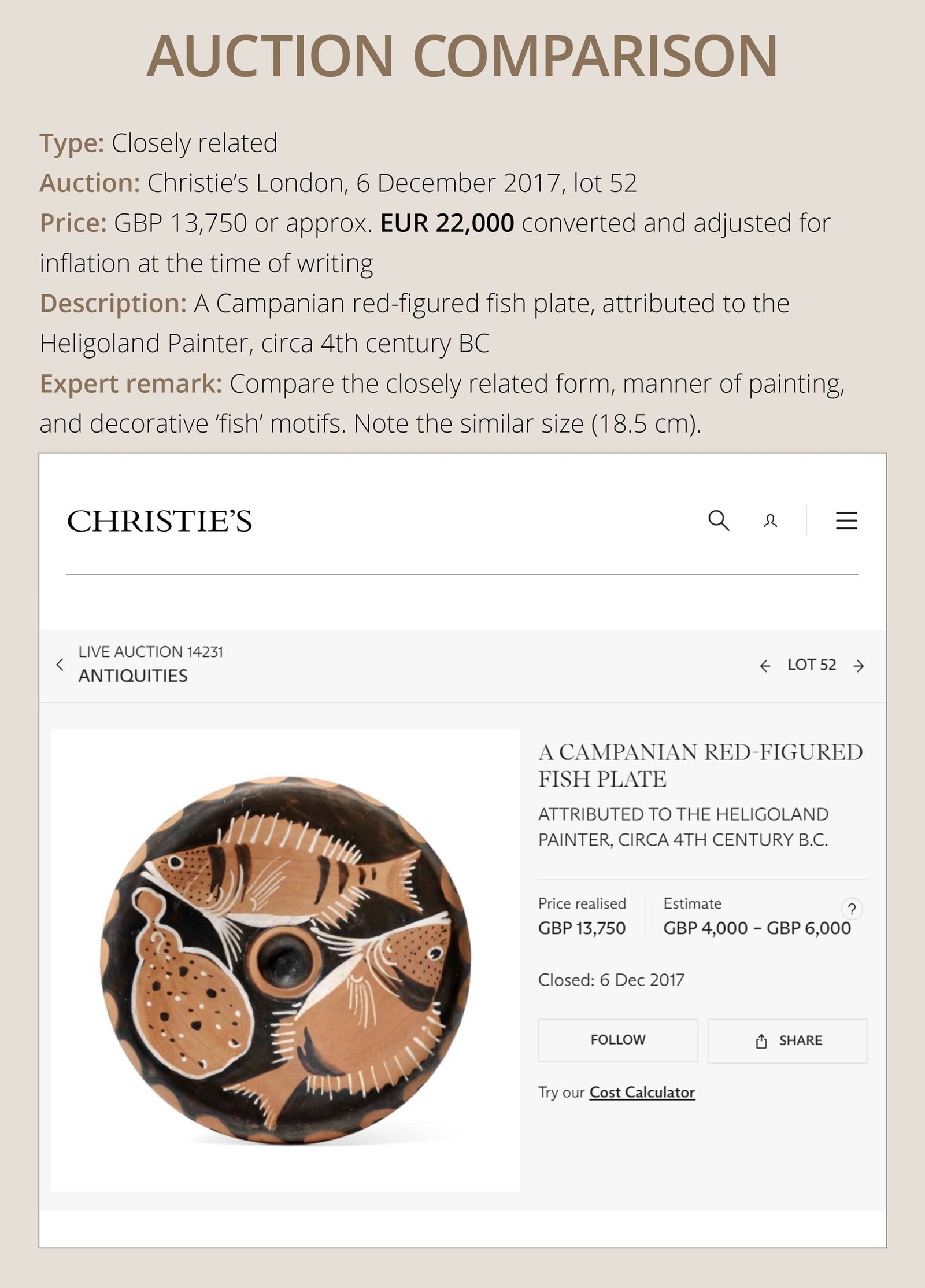 Image 4 of 8
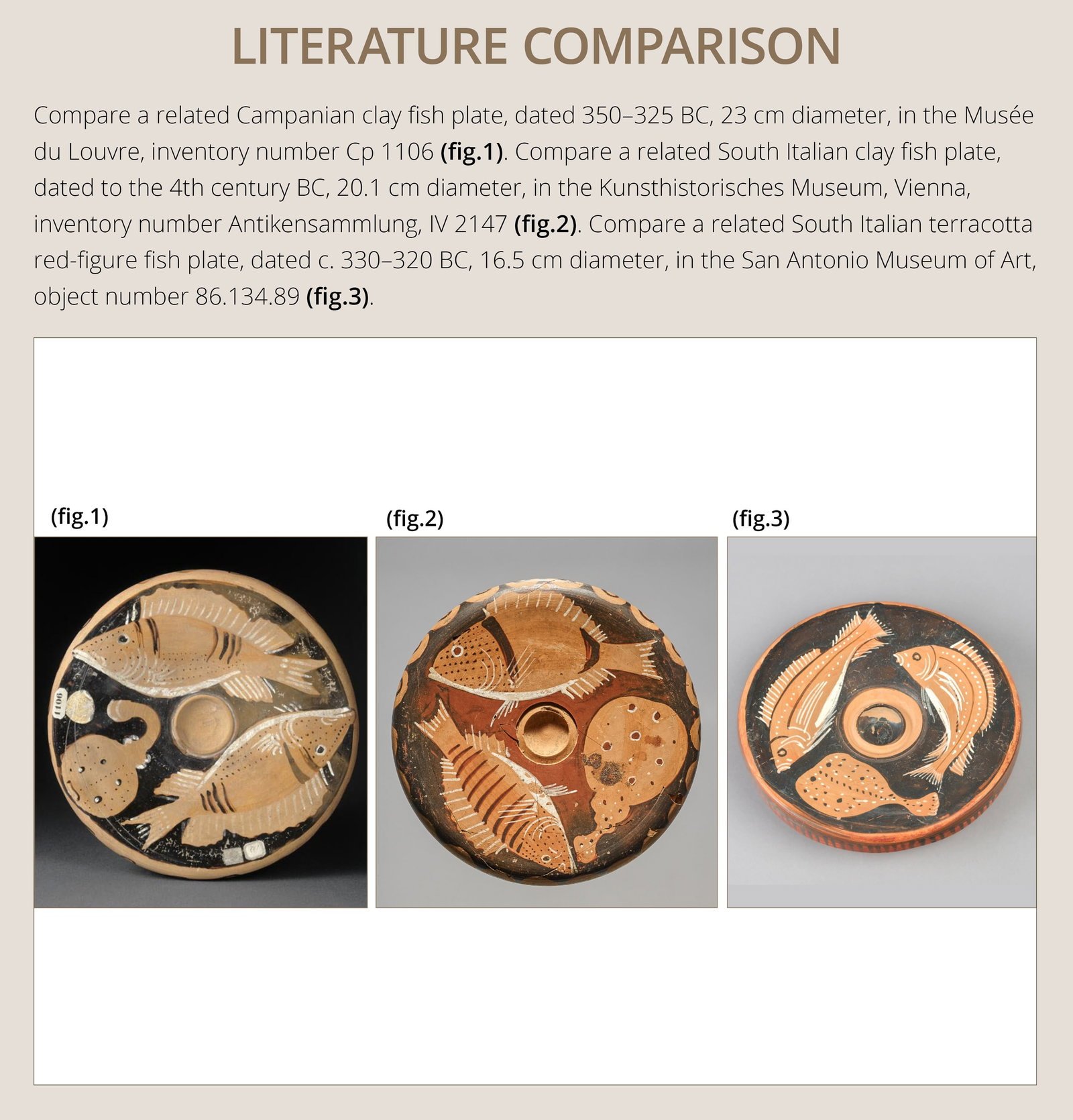 Image 5 of 8
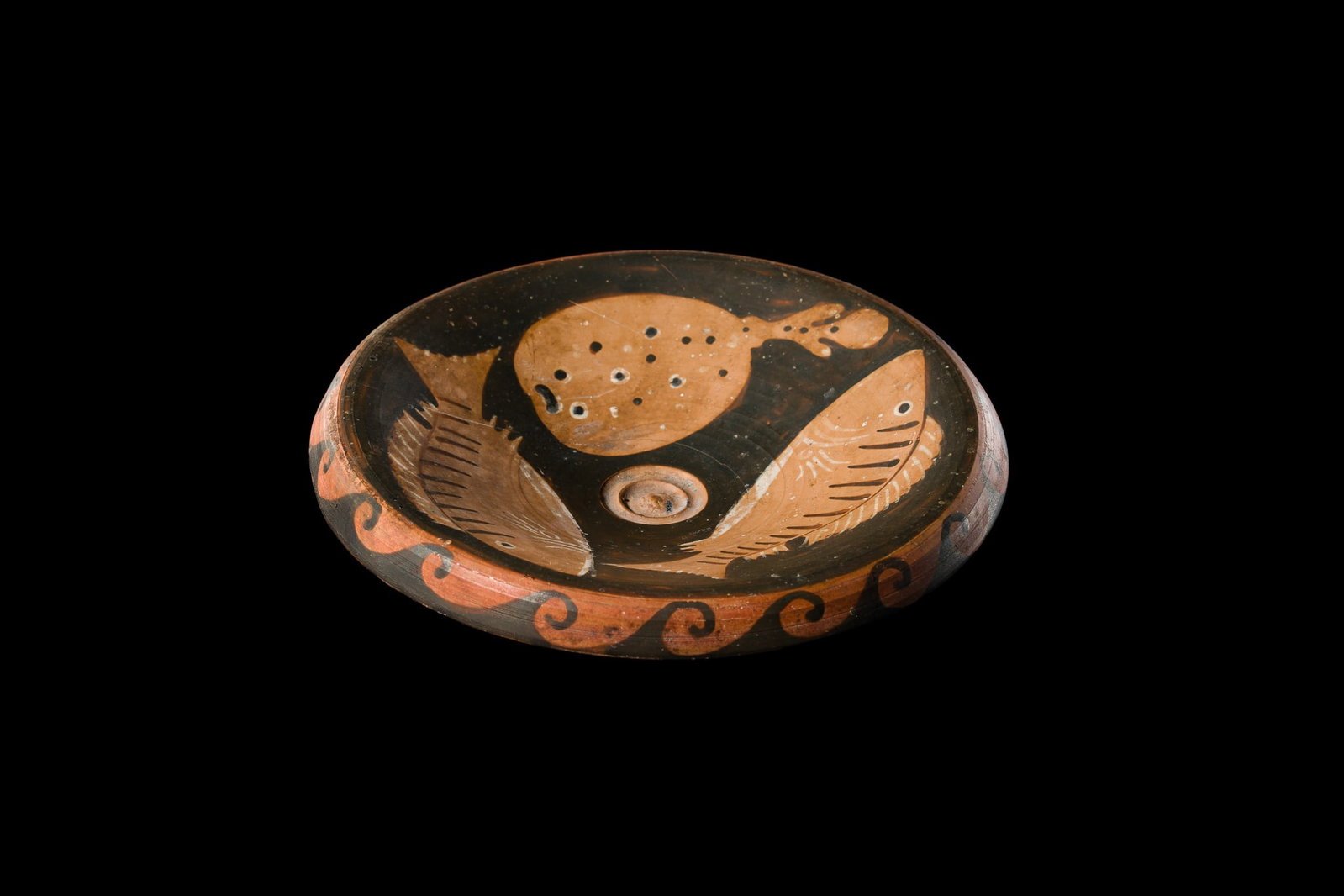 Image 6 of 8
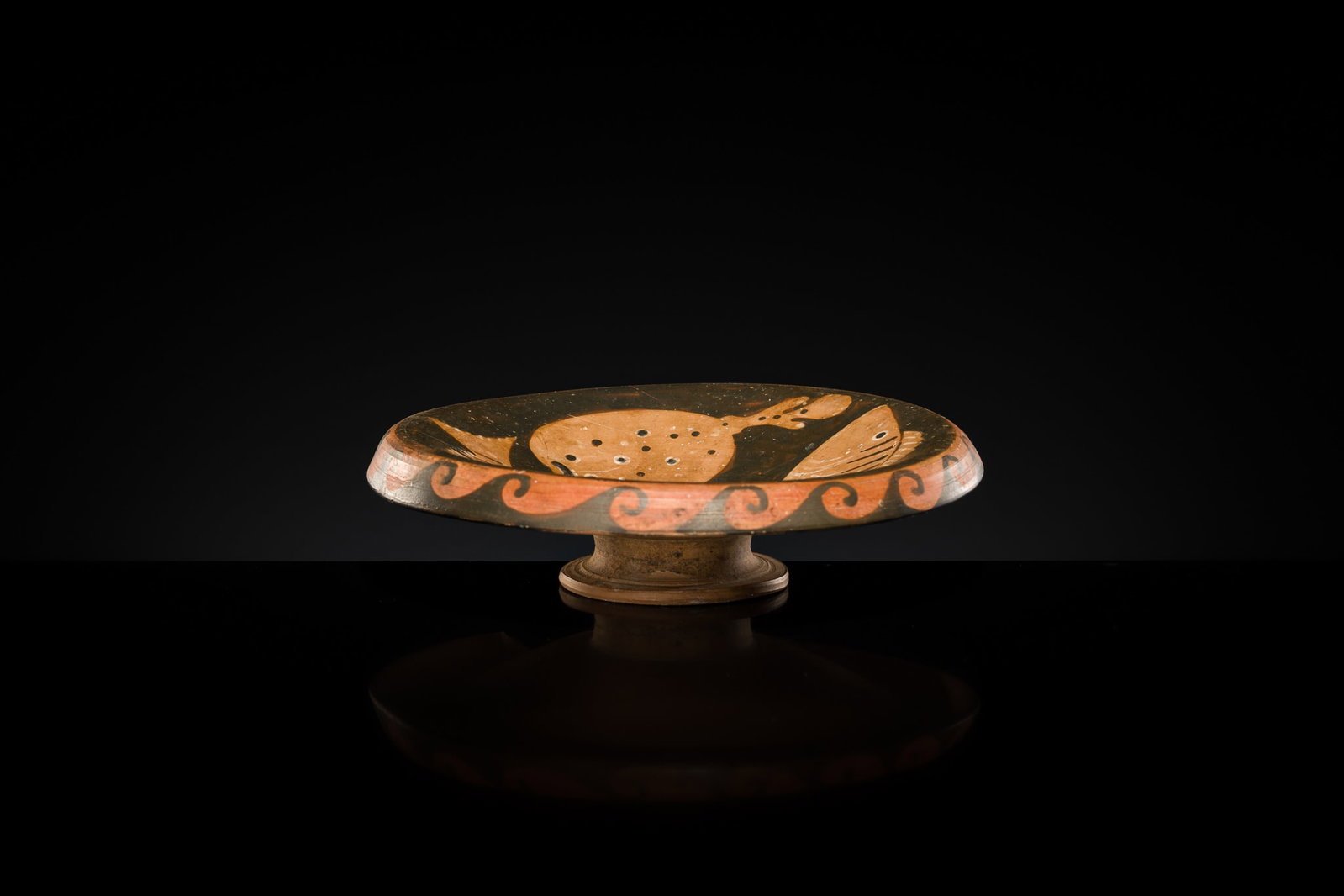 Image 7 of 8
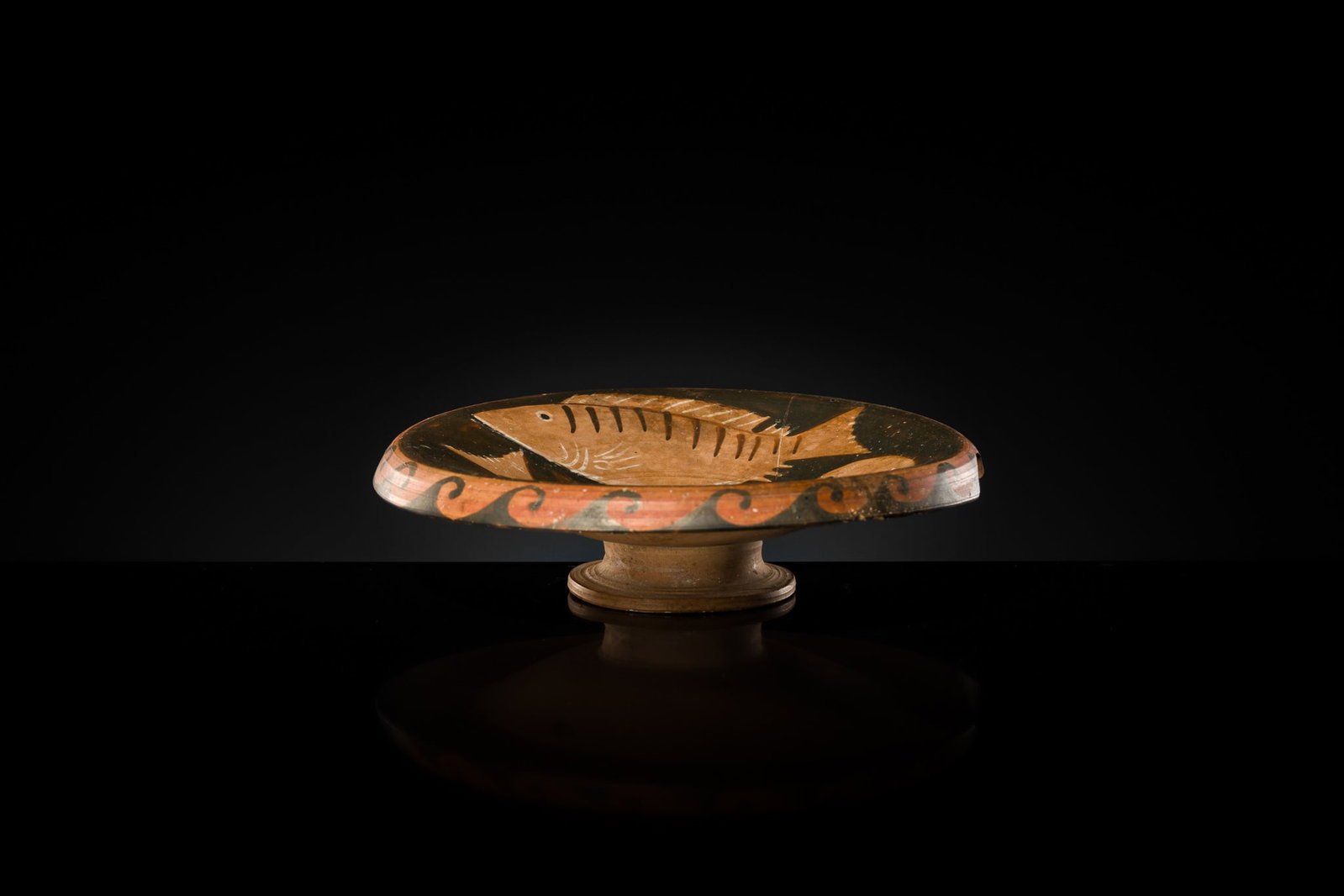 Image 8 of 8