A RARE COLLECTION OF EIGHT MALE AND FEMALE ADORANT BRONZE FIGURES, DAGHESTAN, CIRCA 500 BC - 500 AD
Expert's note
Only a bit over one hundred examples of these rare figurines have been recorded since 1867, including male, female, and hermaphroditic figures, many with explicitly sexual or phallic characteristics. One of the earliest substantial studies was published in 1933 by Alexei Zakharov in the Polish archaeological journal Światowit under the title 'Materials for the Archaeology of the Caucasus: Anthropomorphic Bronze Figurines', proposing a classification based on pose and archaeological context while leaving questions of chronology and origin unresolved.
Only in recent decades has a broader specialist literature become available in English, yet the dating of the group remains debated: many scholars have favored the first millennium BC, while technical and compositional analyses undertaken by Dr. Peter Northover in the late 1990s supported a broad range of approximately 500 BC-500 AD. By contrast, Prof. Murtazali S. Gadjiev proposed a later date in the 6th-9th centuries AD, based in part on the discovery of comparable figurines together with a small spoon datable to that period. See Robert Chenciner, Ancient Copper Alloy Figurines from Daghestan, in The Antiquaries Journal, vol. 79, September 1999, p. 59-79.
North Caucasia. Each boldly cast, the stylized anthropomorphic figures depicted with elongated limbs, some with prominent genitalia. Five are shown with their arms raised in an attitude of prayer, their hands disproportionately large; two smaller figures have the arms arched away from the torso; and a final figure is depicted with the hands crossed over the abdomen. The faces rendered with highly schematic features.
Provenance: Collection of Agnieszka Mancewicz, Krakow, Poland, acquired before 1990 and thence by descent. Thereafter with Martin Doustar, Brussels, Belgium. Agnieszka Mancewicz (1940-2021) was an architect and urban planner based in Kraków. As the daughter of painter Alina Dawidowicz, she was immersed from an early age in the artistic circles of the city and maintained lifelong ties with its cultural milieu. A graduate of the Cracow University of Technology, she pursued a professional career in architecture and urban planning while remaining closely engaged with the visual arts. contributing to the development and planning of Kraków during the post-war period. From 1969, she was associated with SARP, the Association of Polish Architects, and remained active within the architectural community of the city. Martin Doustar is a Brussels-based art dealer and collector whose career spans more than two decades. He began his professional journey in the early 2000s with a focus on Modern Art, developing a keen interest in the ways early twentieth-century artists were influenced by 'primitive' art from Africa and Oceania. Over time, his connoisseurship expanded into archaeological and ethnographic fields, with particular expertise in the ancient arts of the Pacific, Africa, and pre-Columbian America, while also encompassing Asian material culture and modern masterpieces. He is the author of numerous scholarly catalogs and has organized thematic exhibitions on a wide range of subjects.
Condition: Good condition, with old wear, casting irregularities, traces of weathering, areas of deep corrosion, and signs of prolonged burial. The bronze with a rich, naturally grown patina, some of the figures with vibrant malachite encrustations.
Weight: 562.3 g (incl. frame)
Dimensions: Height 4.2 - 7.4 cm (figures), Size 22 x 22 cm (frame)
Mounted on a linen and wood frame. (9)
The present lot belongs to a well-known group of small lost-wax copper-alloy figures, generally measuring between 30 and 60 mm in height, found primarily in the mountainous regions of western Dagestan and southeastern Chechnya in the Caucasus, where they appear to have been associated with ancient ritual practices. Typically represented standing and nude, many display distinctive gestures of devotion, with the arms raised or the hands brought together, and therefore sometimes conventionally described as 'adorants'. Early finds were at first sometimes interpreted as isolated toys or curiosities, before their connection with ancient cult practices in the Caucasus was more fully recognized.
Archaeological evidence indicates that anthropomorphic bronze figurines appeared in the Caucasus as early as the 15th-13th centuries BC, although figures displaying the characteristic devotional gestures seen in the present group appear to have emerged at a later date during the Iron Age. The exact interpretation of these distinctive postures, particularly the significance of the raised arms, has remained elusive and the subject of considerable scholarly debate.
Literature comparison:
Compare a related Iranian bronze pendant in the form of an anthropomorphic figure, dated c. 1000-650 BC, 3.5 cm high, in the Los Angeles County Museum of Art, accession number M.76.97.979. Compare a related Alanic copper alloy disc pendant containing an anthropomorphic figure, dated to the 6th-8th century AD, 5 cm diameter, in the British Museum, registration number 1983,1107.5.
- Period: 1990s
- Materials: bronze
- Dimensions: Height 4.2 - 7.4 cm (figures), Size 22 x 22 cm (frame)
- Estimate: EUR 2,000 – 4,000
- Starting bid: EUR 2,000
- Auction house: Galerie Zacke
- Sale: Fine Antiquities & Ancient Art · 2026-11-20
- Lot: 0128
- Collectip: COLLECTIP FAVOURITE →
View the lot at auction

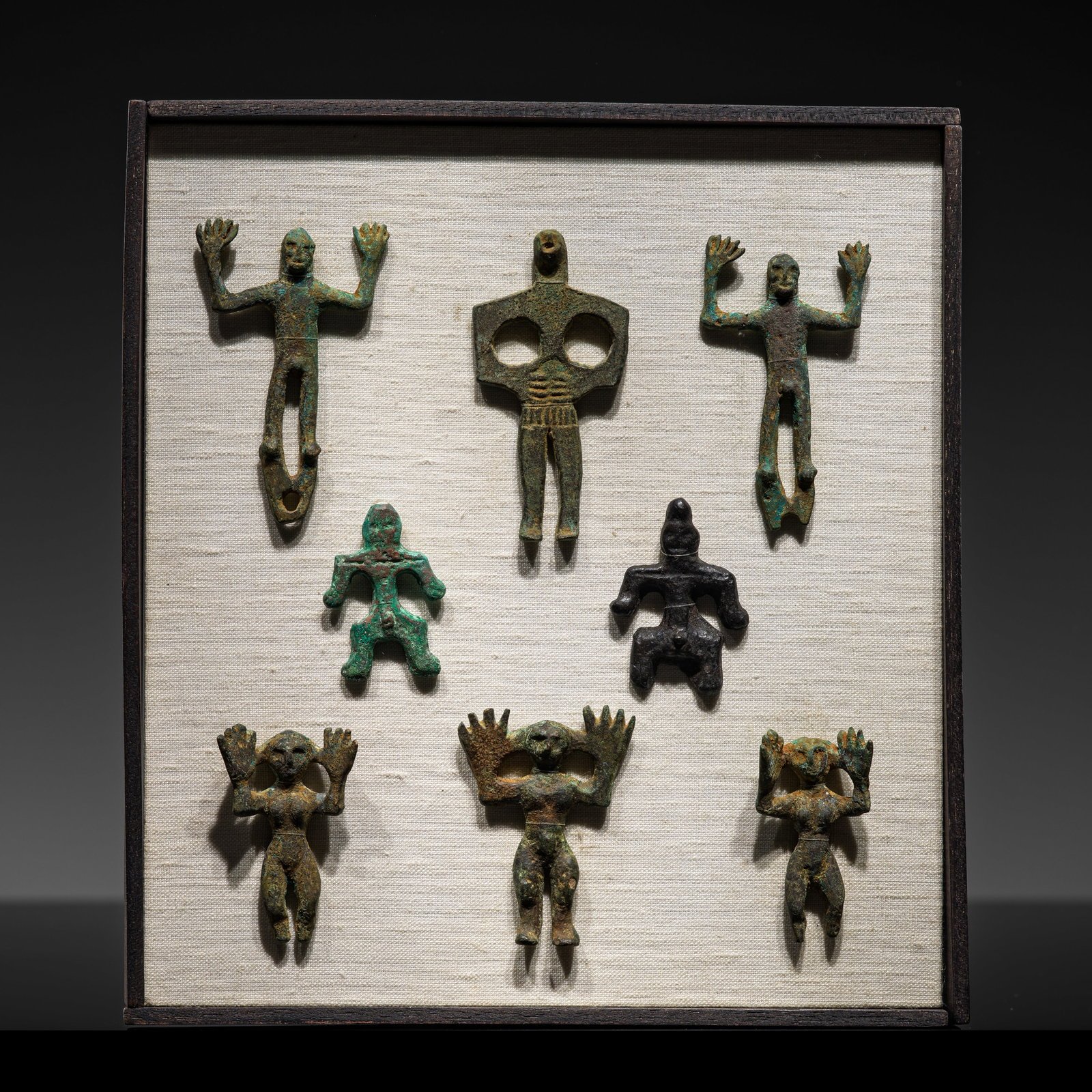 Image 1 of 8
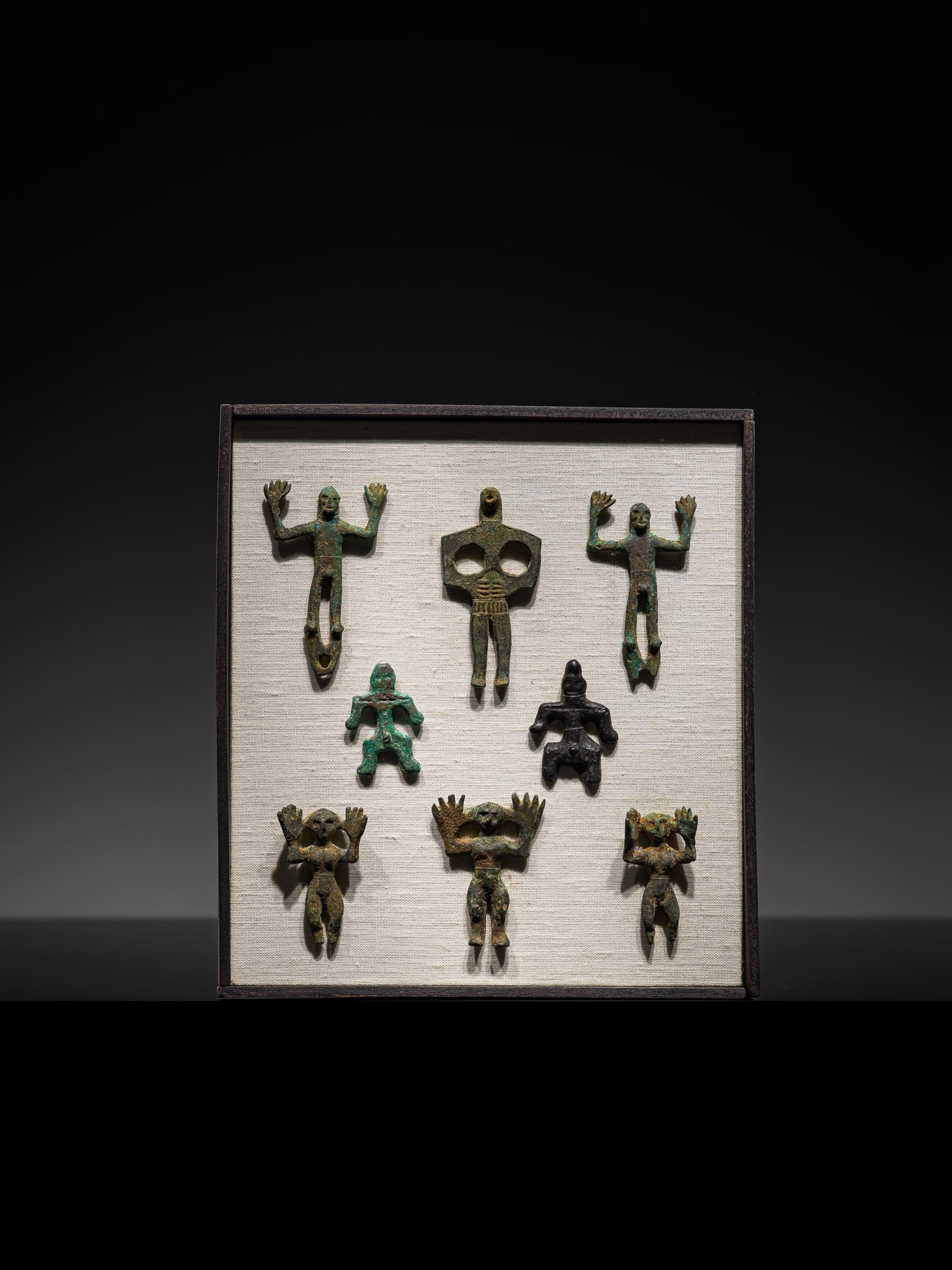 Image 2 of 8
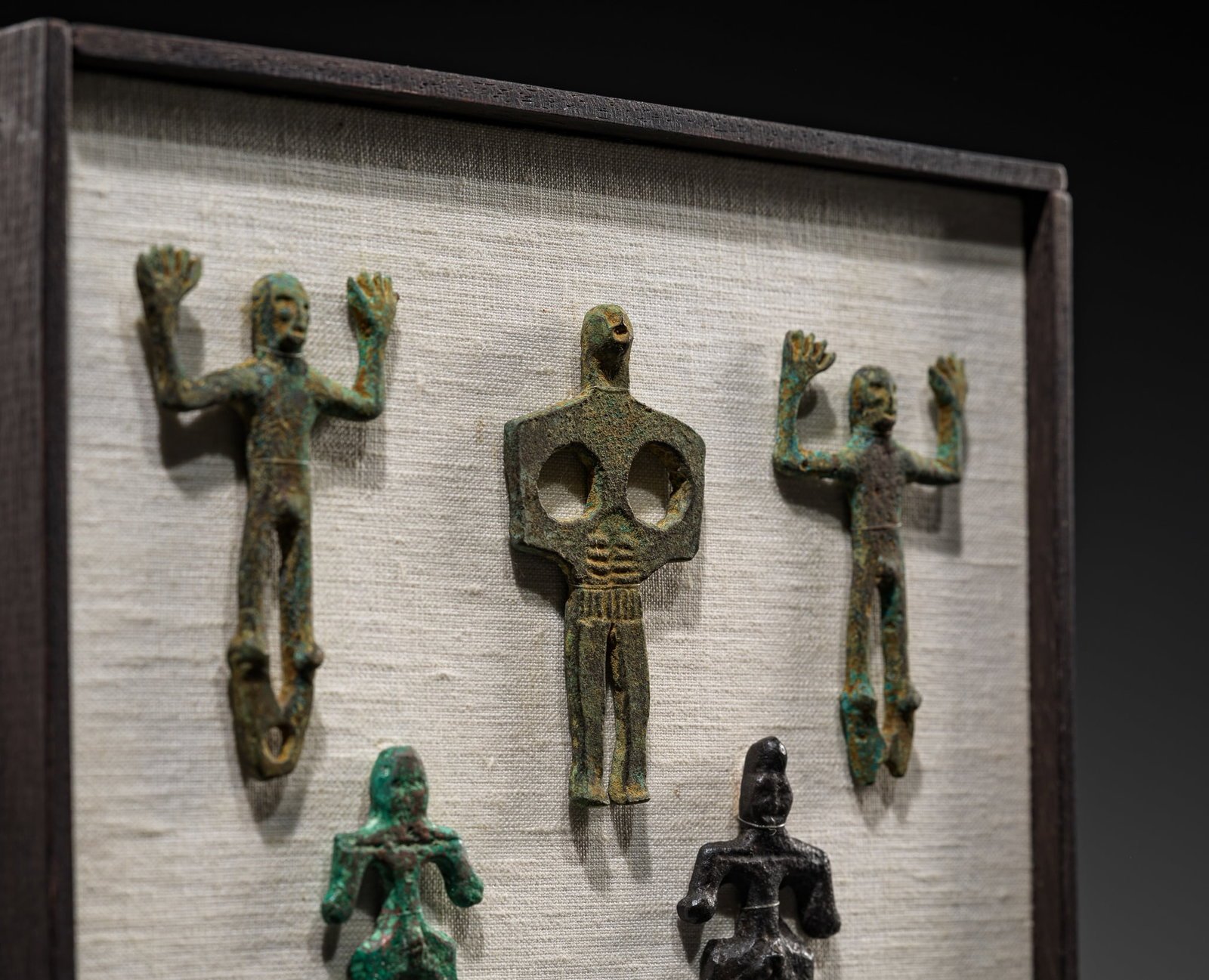 Image 3 of 8
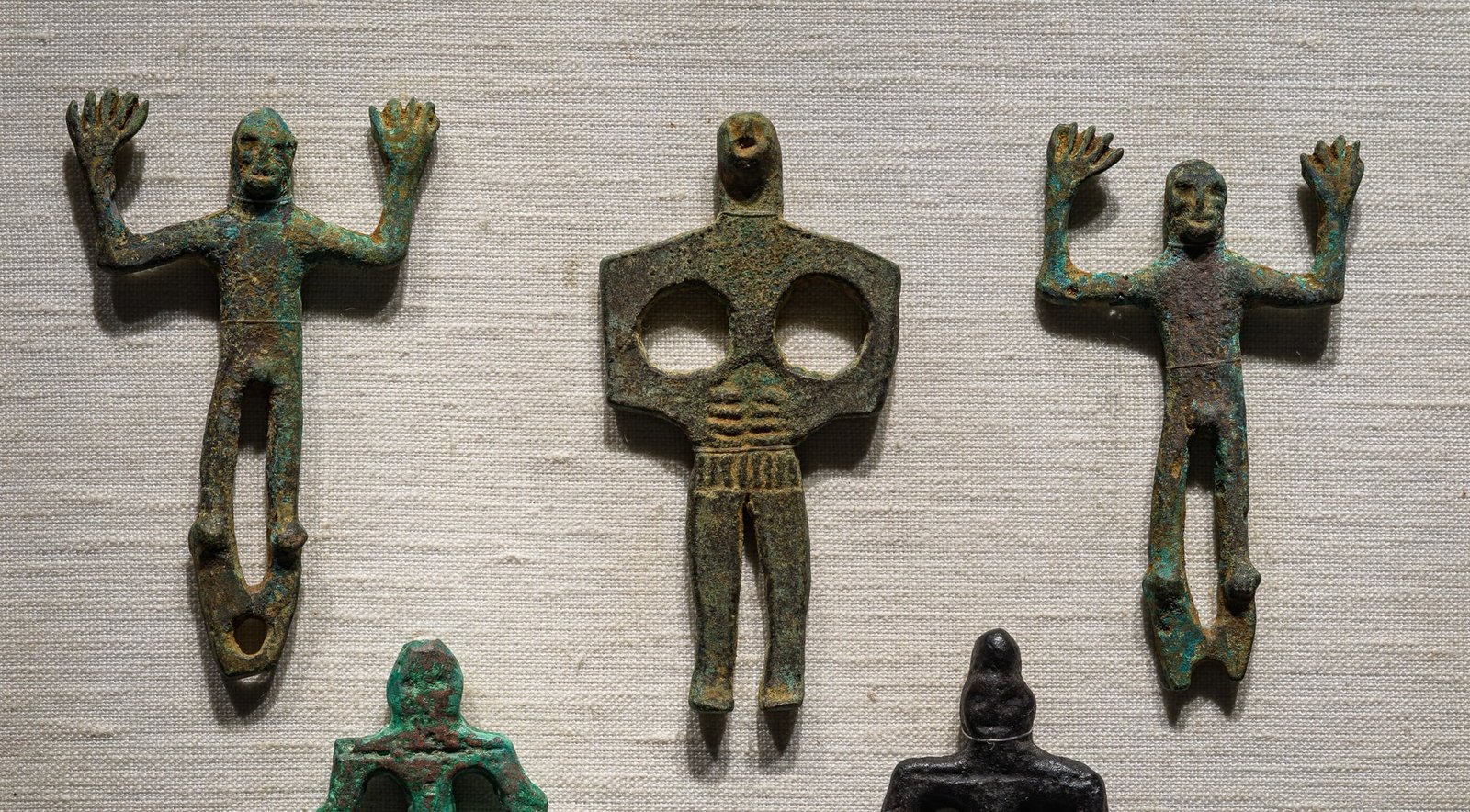 Image 4 of 8
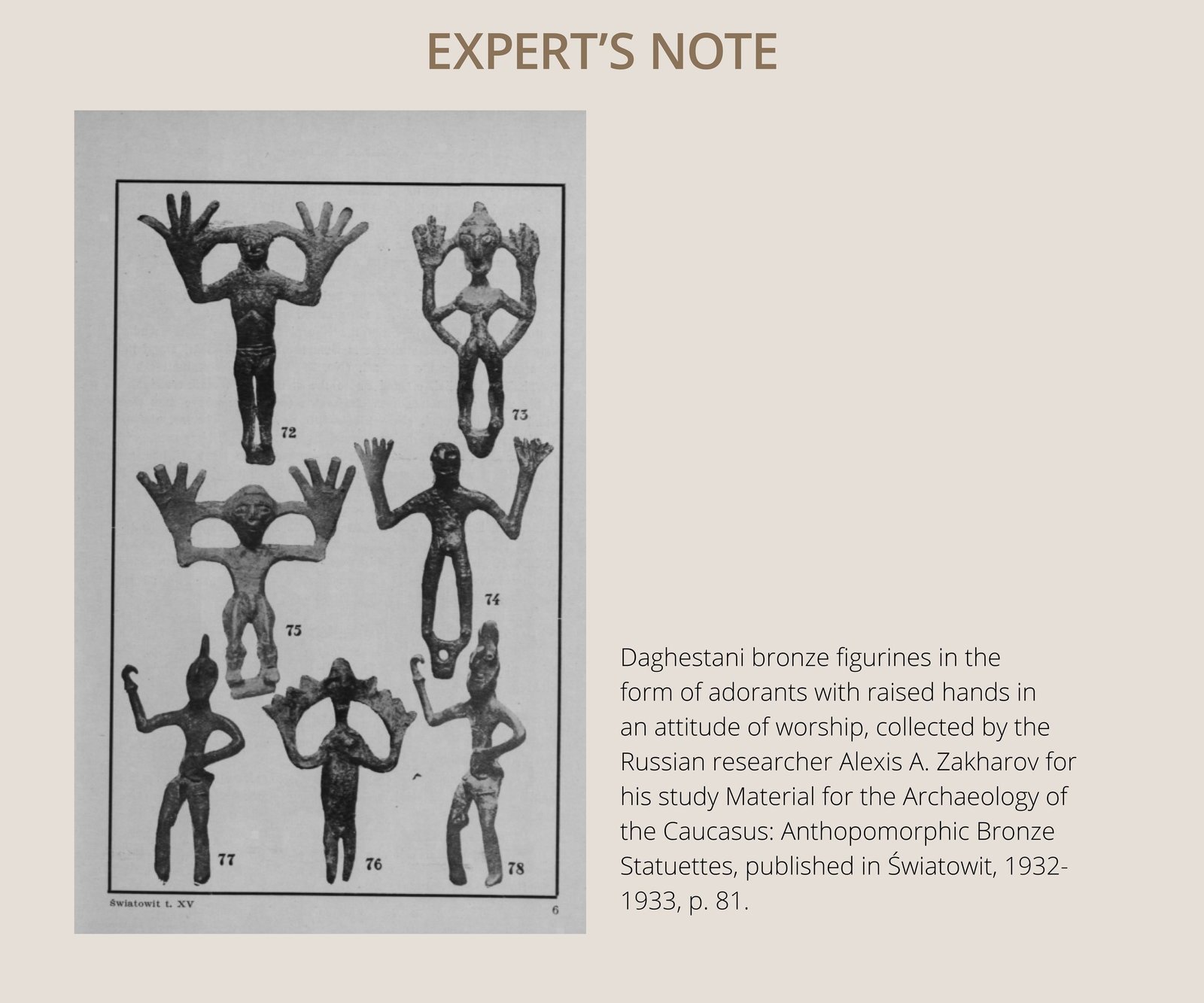 Image 5 of 8
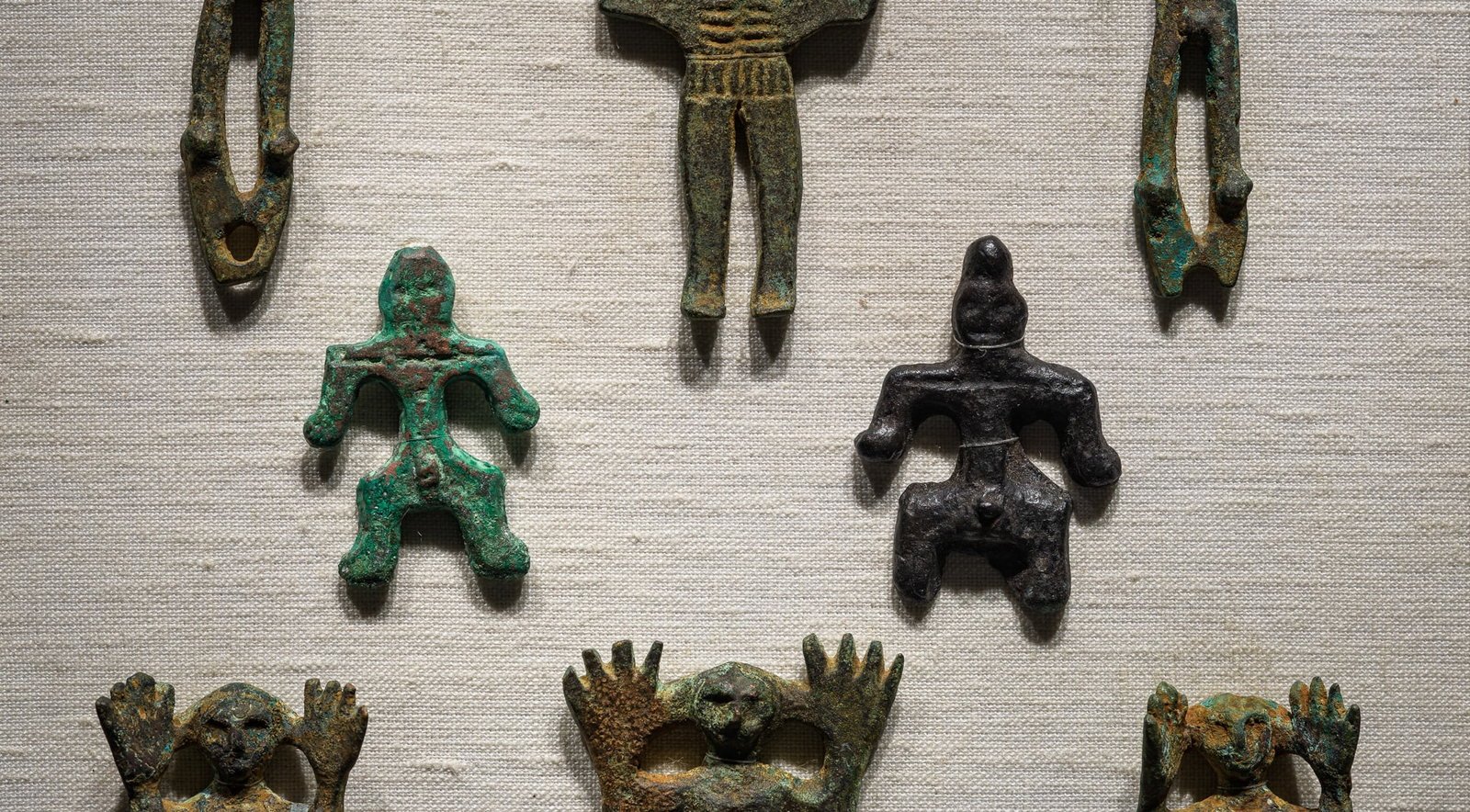 Image 6 of 8
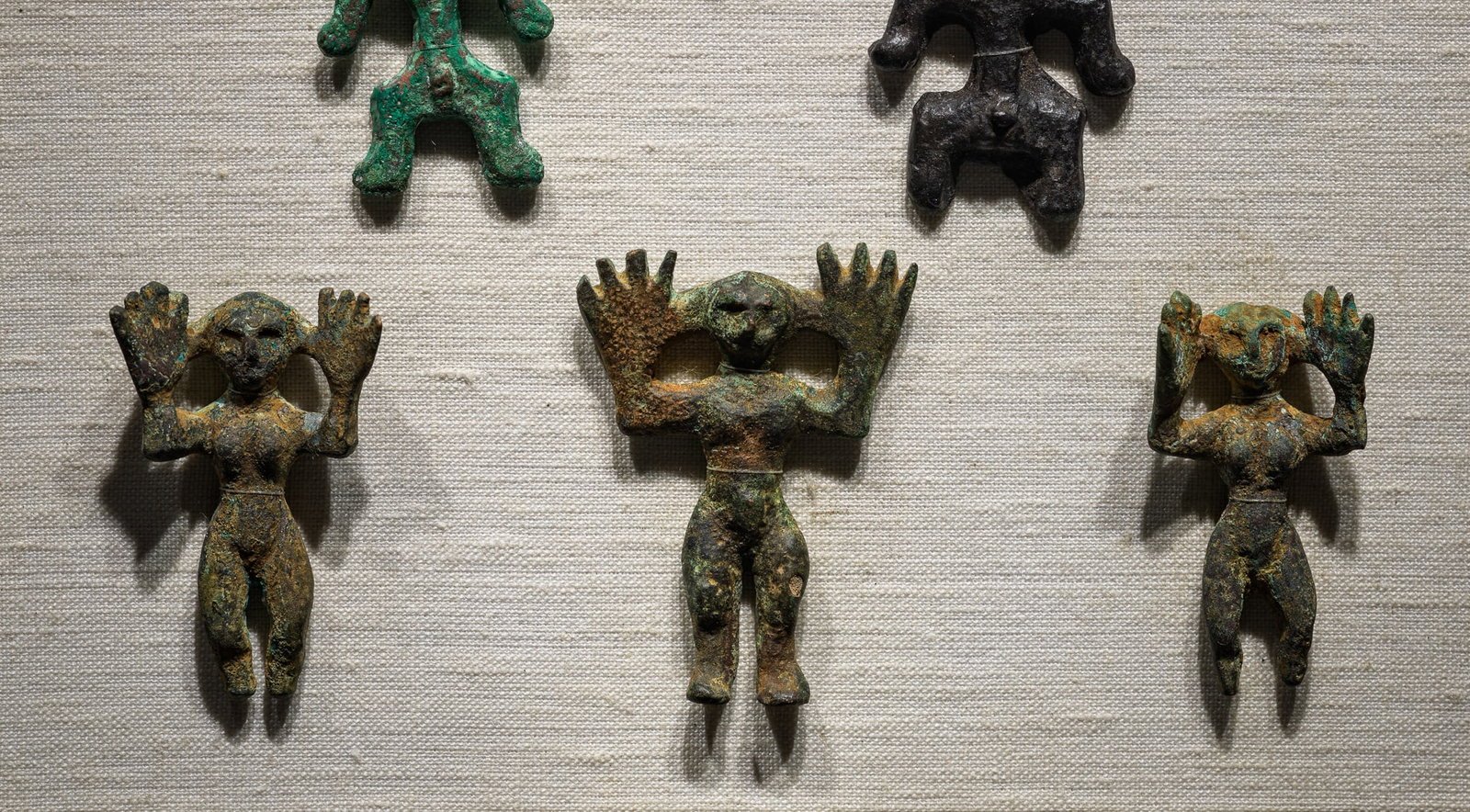 Image 7 of 8
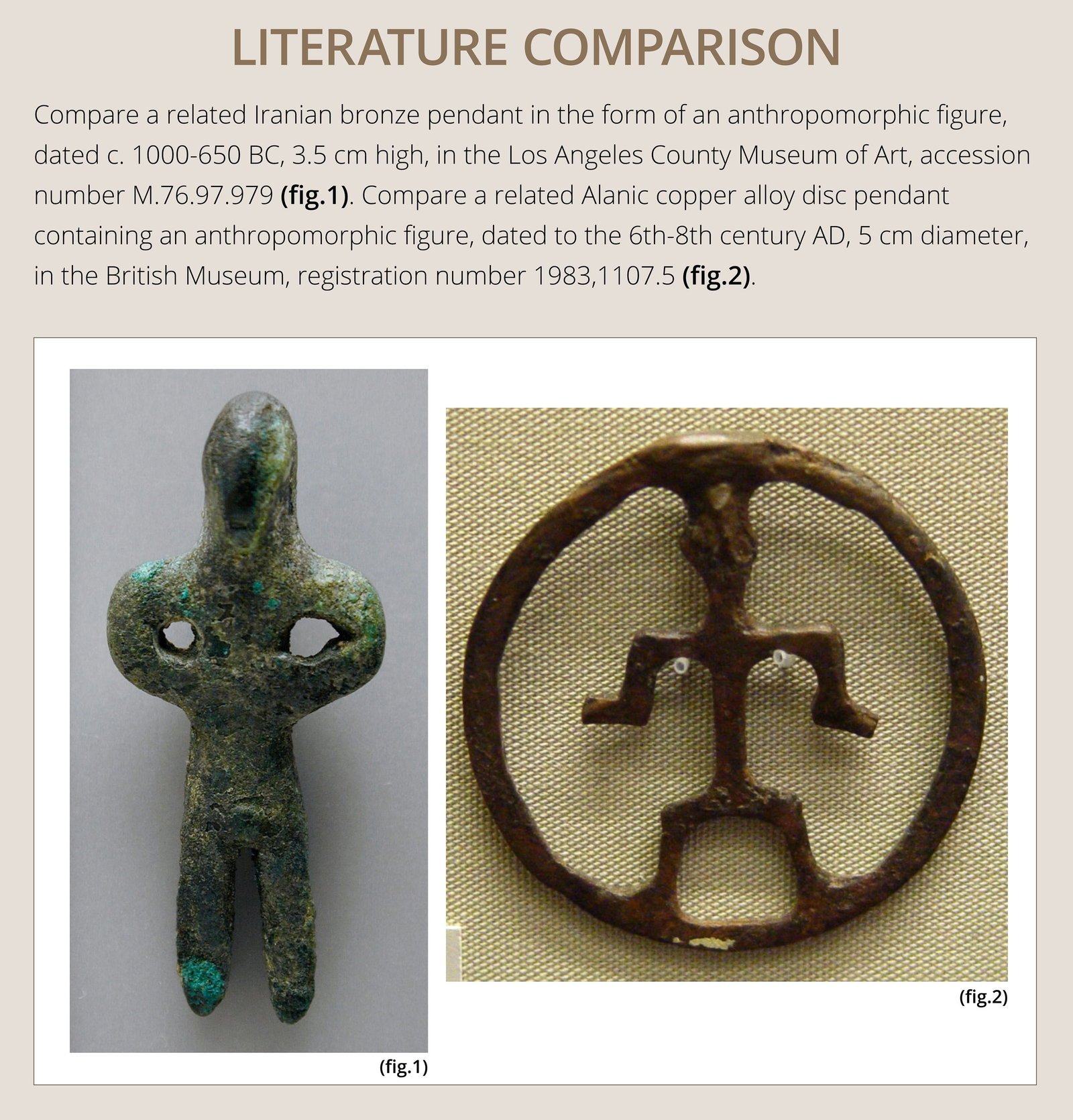 Image 8 of 8